 bobby-hartono
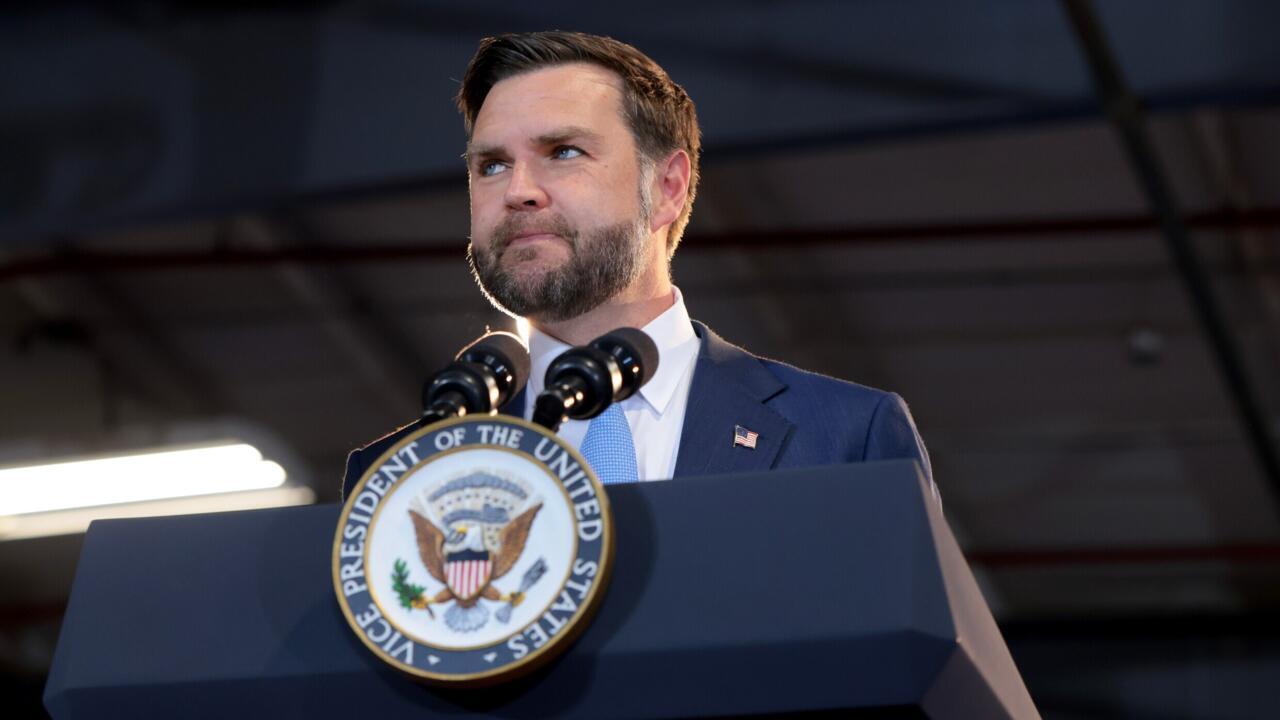
Content: US Vice President JD Vance is set to address the Republican Jewish Coalition at their annual gathering, a move that has sparked a wave of concern among conservative Jewish activists. Vance's approach to Israel and his association with figures such as Tucker Carlson, who has been accused of fostering anti-Semitism, have been the subjects of scrutiny within the conservative movement.
The appearance by Vance, which will be closed to the news media, comes at a particularly tense time. Jewish Americans and the US relationship with Israel are under increased scrutiny, with concerns about anti-Semitism reaching new heights ahead of the midterm elections. While Republicans aim to paint Democrats as hostile towards Jews and Israel, they must also navigate internal divisions, including those surrounding Vance's stance on Israel and his ties to controversial personalities.
Vance recently suggested that some Israeli officials have attempted to sway US public opinion to prolong the conflict with Iran. Additionally, his reluctance to denounce Carlson, who hosted white supremacist Nick Fuentes last year, has raised eyebrows. This has led to a sense of unease among some within the Republican Jewish Coalition, who are grappling with the vice president's true sentiments.
"There's a sentiment here of some discomfort over the vice president speaking. Some people are disappointed," said Terry Platt, a member of the coalition from New York. "We're confused about his true sentiments."
Vance, who is widely seen as a potential Republican nominee to succeed President Donald Trump in 2028, has expressed support for Israel but has been viewed as more cautious or skeptical compared to Trump. Last June, he criticized Israeli government officials for opposing Trump's attempts to resolve the war with Iran. In July, he alleged that certain elements within the Israeli government were attempting to influence American sentiment to maintain the conflict indefinitely.
Support for Israel has waned in the United States, with a significant decline among Democrats following Israel's military campaign in Gaza in response to Hamas attacks in October 2023. An AP-NORC poll found that approximately half of Democrats believe Israel has committed genocide against Palestinians. While Republicans are more likely to support Israel, a generational divide exists within the party, with younger Republicans expressing more skepticism about US support for Israel.
The divide has been unsettling for influential Jewish conservatives who have utilized the annual Republican Jewish Coalition summits to combat anti-Semitism. "We need a country where elected officials stand proudly with the Jewish community," said US Congresswoman Lisa McClain of Michigan during a recent summit. "That is the work, and it begins before we leave this room."
Last year's summit, which was initially planned as a celebration of the Trump administration's efforts to return Israeli hostages, turned into a series of condemnations of anti-Semitism within the conservative ranks. This shift was sparked by the Heritage Foundation's refusal to distance itself from Carlson following his hosting of Fuentes.
Prominent pro-Israel conservative Bruce Pearl, the Auburn University men's basketball coach, has emphasized the need for Vance to reject Carlson's association to gain his support. "If he maintains that connection to that anti-Semite," Pearl said, "it would be difficult for me to support him."
As the Republican Jewish Coalition prepares for Vance's address, the spotlight on his stance on Israel and his ties to potentially contentious figures remains a point of contention. The outcome of his remarks and the response from the coalition could have significant implications for the future of Republican politics and its relationship with Jewish Americans.






Comments (0)