 bobby-hartono
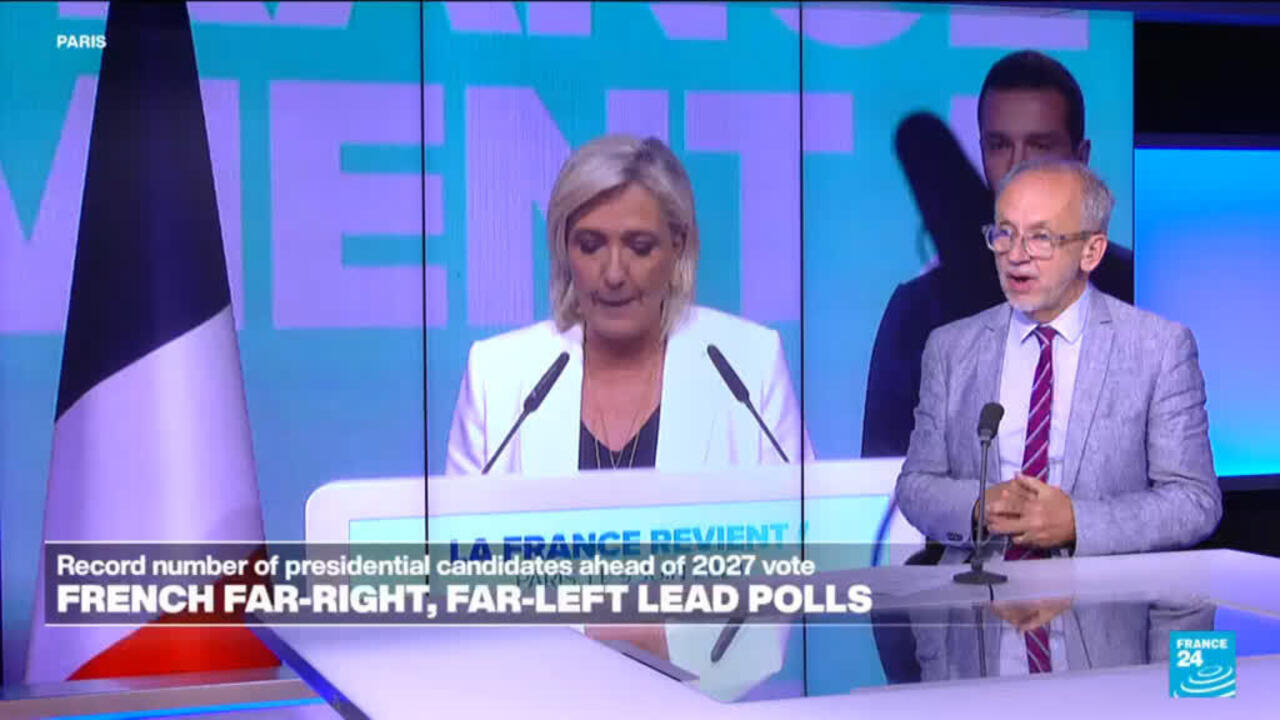
**Paris, France** – As the nation braces for its next presidential election, recent polls have indicated a surprising trend, with both the far-right and far-left parties leading the charge. The results come as a stark contrast to the traditional center-right and center-left dominance that has long characterized French politics.
The poll, conducted by a reputable French research firm, reveals that the far-right National Rally party, led by Marine Le Pen, and the far-left France Insoumise party, led by Jean-Luc Mélenchon, are neck and neck in terms of public support. Both parties have capitalized on the growing disillusionment with the traditional political establishment and the increasing number of voters who feel their voices are not being heard.
Marine Le Pen, the daughter of the party's founder and a well-known figure in French politics, has been a vocal critic of immigration and the European Union. Her campaign has focused on national sovereignty and economic protectionism, promising to "make France great again." Her rise in popularity has been attributed to a combination of economic anxieties and a strong anti-establishment message.
On the other side of the political spectrum, Jean-Luc Mélenchon has gained traction with his calls for a "people's revolution" and his proposals for a "New Republic." His platform includes policies aimed at reducing inequality, increasing social spending, and reasserting France's role in international affairs. Mélenchon's popularity has been bolstered by his ability to appeal to both the left and the disaffected right.
The current polls have caused a stir in political circles, with many observers questioning whether this trend represents a seismic shift in French politics or a temporary blip. Historically, France has been known for its centrist political culture, and the rise of far-right and far-left parties has raised concerns about the country's political stability.
The traditional center-right and center-left parties, such as the Republicans and the Socialists, have been struggling to maintain their relevance in the face of the growing challenge from the fringes. Both parties have been criticized for being too focused on the past and not enough on the future challenges facing the nation.
The upcoming presidential election is expected to be one of the most closely watched in recent memory. With the far-right and far-left leading the polls, there is a real possibility that the next French president could come from one of these parties. This would mark a significant departure from the country's political norms and could have far-reaching implications for France's domestic and foreign policy.
The election campaign has already been marked by a series of high-profile debates and policy announcements. Both Le Pen and Mélenchon have been aggressive in their attempts to win over voters, often attacking each other's proposals and policies. This has led to a highly polarized atmosphere, with many voters feeling that their only choice is between two extremes.
Despite the polls, some political analysts remain cautiously optimistic about the possibility of a more moderate candidate emerging. The possibility of a runoff between the top two candidates is not out of the question, and many believe that a runoff would allow voters to choose between the two less extreme options.
As the election approaches, the focus will shift to the candidates' ability to connect with the electorate and present a compelling vision for the future of France. The outcome of the election could have significant implications not only for France but for the entire European Union, given the nation's role as a key player in the region.
In conclusion, the recent polls indicating that the far-right and far-left parties are leading the presidential race in France have sparked a national debate about the country's political future. The results have raised questions about the stability of the political system and the direction in which France is heading. Only time will tell how these trends will play out in the upcoming election and its aftermath.







Comments (0)