 kimberly-sutanto
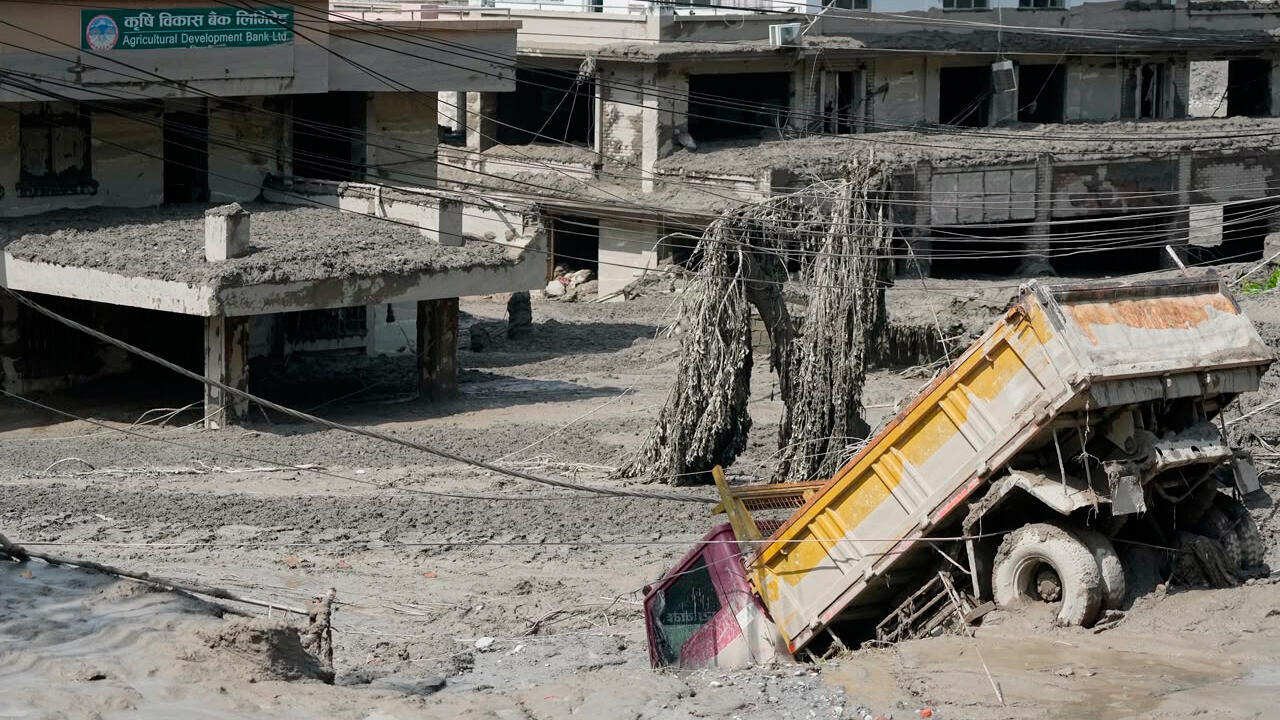
KATHMANDU — Rescue teams working along the Nepal-Tibet frontier have recovered at least 22 bodies after a violent flash flood swept through communities on both sides of the border, while authorities said Wednesday that 384 people remain missing in the disaster zone.
Among the unaccounted-for are large groups of travelers, with officials reporting 384 tourists missing — 291 of them foreign nationals from countries including India, the United States, the United Kingdom and Malaysia. The sheer number of visitors caught in the deluge has fueled fears that the casualty figures could climb sharply as search operations advance.
Across the border in Tibet, Chinese state broadcaster CCTV announced Wednesday that a mudslide unleashed on the Nepalese side had wrought "major casualties and missing people" at the Gyirong Port crossing. The broadcaster aired dramatic footage — which AFP said it was unable to verify right away — appearing to show churning brown waters dragging tree trunks and scattered wreckage downstream over an inundated road.
The catastrophe struck shortly after 9 a.m. Wednesday, when the Bhotekoshi River abruptly surged past its banks. According to officials, the torrent flattened several villages and tore up roads and hydropower facilities in its path. Emergency alerts were subsequently sent to residents across multiple districts, instructing them to keep well clear of the Bhotekoshi, Trishuli and Narayani riverbanks.
"We have asked both India and China to help us with the rescue efforts," said Sasmit Pokharel, a spokesperson for the Nepali government.
Rasuwa district absorbed the hardest blow, and the area knows this kind of grief all too well. In August of last year, comparable flash floods hit the same district after a glacial lake in neighboring Tibet overflowed amid scorching temperatures in the high mountains. That episode claimed nine lives and wrecked crucial infrastructure, among it a bridge serving as a vital link between the two nations.
Experts at the Kathmandu-based International Centre for Integrated Mountain Development suspect that an avalanche tumbling off a glacier set Wednesday's disaster in motion. They identified the Lhende Khola River — a tributary that feeds into the Bhotekoshi — as the site of the most extreme flooding.
Saswata Sanyal, a specialist in disaster risk reduction at the climate research organization, observed that the river had now been struck twice in quick succession. "The Lhende Khola has flooded twice in fourteen months," he explained, noting that the latest event was set off by "an ice rock avalanche from a glacier on the Nepal side that blocked the river and released a sudden surge downstream." He pressed the case for preparedness: "In a warming Himalaya, early warning is the first line of adaptation."
The wider Himalayan belt, stretching across Nepal, India and adjacent countries, faces acute exposure to intense rainfall, inundations and slope failures precisely because the region is heating up faster than the global average — a shift scientists attribute to climate change driven by human activity. Research has established that heat waves, downpours and retreating glaciers have all grown markedly more common across these mountains.
Findings released earlier this year by researchers in Kathmandu laid bare the speed of that transformation: ice across the entire Hindu Kush Himalaya range is vanishing at an accelerating clip, with losses since 2000 having doubled, primarily owing to climbing worldwide temperatures.
As Wednesday wore on, rescue teams continued combing the devastated river valleys, with Kathmandu appealing to its neighbors in New Delhi and Beijing for support in locating the hundreds who remain unaccounted for.
--- END ---







Comments (0)