 bobby-hartono
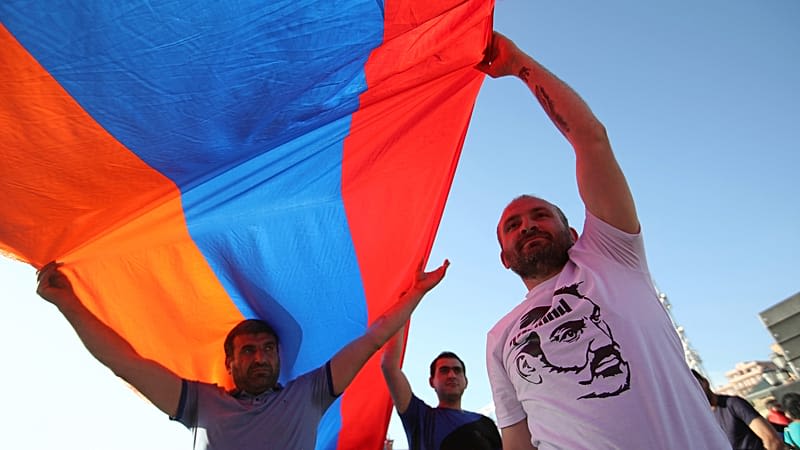
Armenian Prime Minister Nikol Pashinyan announced on Monday that his government will begin preparations to formally apply for European Union membership, marking one of the most significant geopolitical realignments in the South Caucasus since the collapse of the Soviet Union.
Addressing parliament, Pashinyan laid out a carefully sequenced path: Yerevan would submit its application first, await a response from Brussels, negotiate an accession roadmap with the bloc, and only then put the question of joining the EU to voters in a national referendum, which he indicated could come in the near future.
The announcement puts Armenia on a collision course with Moscow. The country remains a member of the Russia-led Collective Security Treaty Organisation (CSTO), and fellow members recently pressed Yerevan with an ultimatum to choose between staying in the alliance or pursuing EU integration through a referendum. At that time, Pashinyan had called such a decision premature.
On Monday, however, he struck a different tone, saying he would welcome it if the alliance expelled Armenia outright, noting that this would at least spare the country from having to decide whether to withdraw. He stressed nonetheless that Armenia intends to stay in the CSTO for now, until choosing between the two blocs becomes unavoidable.
Pashinyan also delivered a pointed reassessment of Armenia's reliance on its traditional patron. For roughly two centuries, he said, ties between the two countries rested on the assumption that Russia guaranteed Armenian security, but events from 2021 through 2023 — spanning Armenia's wars with Azerbaijan over Karabakh — exposed how limited Moscow's capacity to fulfill that role had become, particularly given Russia's own security burdens. He added that Armenians had failed to learn lessons from their history, repeating criticism of the Kremlin for abandoning Yerevan during its final confrontation with Azerbaijan.
Armenia's pivot comes amid a broader regional thaw. Having signed a peace agreement with Azerbaijan in August 2025, the two former adversaries are now pursuing economic cooperation together, with substantial backing from the EU and the United States. Still, Armenia's economy remains tethered to Russia through energy supplies and infrastructure. In a further challenge to Moscow, Pashinyan urged Russia to surrender its railway concession, which runs until 2038, so that Armenia can link its rail network to international corridors, with Kazakhstan and the UAE floated as potential investors.
Moscow reacted quickly. Kremlin spokesman Dmitry Peskov cautioned that aligning Armenia's standards with the EU's could produce what he described as deep trade contradictions, ones that would hurt Armenia first. On the question of the CSTO, Peskov said Yerevan was free to walk away from the alliance if it no longer served its national interests — remarks that suggest a rocky road ahead between the Kremlin and its longtime partner.



Comments (0)